Insights ·
Alloy wheel production: your essential guide
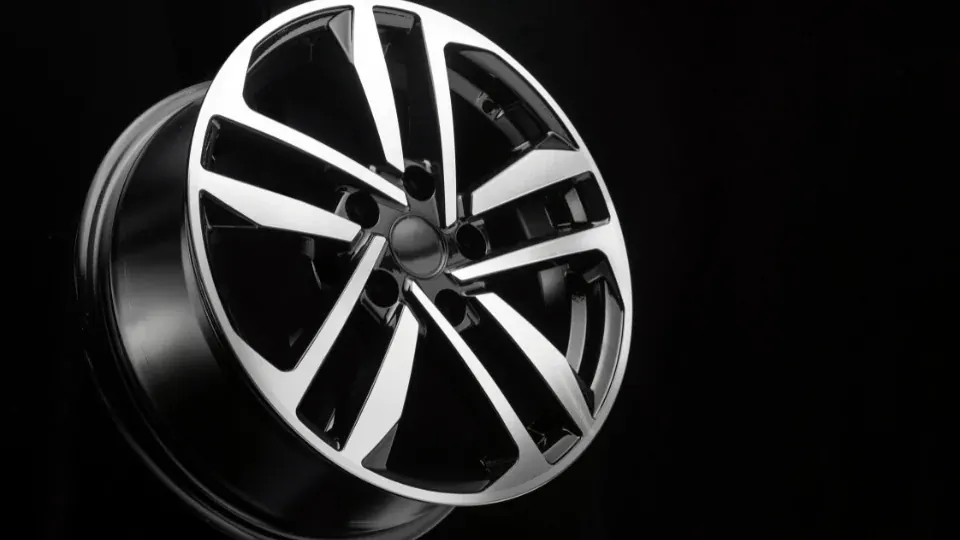
Do you understand the different types of alloy wheel production? From family hatchbacks to high-performance sports cars, alloys play an important role in both the appearance and performance of a vehicle.
According to published data, global alloy wheel production exceeds 850 million units every year. The vast majority are aluminium alloy wheels, which are mass-produced to meet the demands of vehicle manufacturers and the aftermarket sector.
Not surprisingly, China is the global leader in both production and consumption, with major manufacturers such as CITIC Dicastal and Maxion Wheels supplying millions of units annually.
How are alloy wheels actually made?
Alloy wheel production involves advanced metallurgy, precision engineering and rigorous quality testing to create lightweight wheels capable of withstanding the demands of everyday driving. Most alloy wheels are made from aluminium, combined with small amounts of other metals, such as magnesium and titanium, to improve strength and performance.
Metal casting is the most common method of manufacturing alloy wheels, accounting for an estimated 62% of wheels. The process begins with high-grade aluminium ingots being heated in a furnace to around 750 degC. The liquid aluminium is then injected under pressure into steel moulds to eliminate air pockets.
The wheel blank is removed from the mould and rapidly cooled in water, before the finishing work begins.
In short, casting is popular because it allows manufacturers to produce high-quality wheels efficiently and at a relatively affordable cost.
Read our article: ‘The evolution of car wheels: from wood to diamond-cut alloys’.
Forging: the premium option
Another method of alloy wheel production, metal forging creates lighter, stronger wheels, often found on high-performance, luxury vehicles, and motorsport applications. Unlike casting, forging does not involve melting metal. Instead, a solid block of aluminium, known as a billet, is subjected to enormous pressure using hydraulic presses.
The forging process compresses and aligns the metal’s internal structure, creating a wheel that can be up to three times stronger than a cast equivalent while weighing significantly less.
The downside is cost. Forging is a more complex and time-consuming process, which is why forged wheels are generally reserved for premium vehicles.
Flow-forming: combining strength and value
Often considered the middle ground between casting and forging, flow-forming starts with a cast wheel blank, which is mounted onto a spinning machine. Heavy rollers then apply pressure to the rim section while it rotates. This stretches and compresses the metal, improving its grain structure and increasing strength.
The finished wheel offers many of the benefits associated with forged wheels, particularly around the rim area, but at a much lower manufacturing cost. As a result, flow-formed wheels have become popular among performance car manufacturers and aftermarket wheel brands.
Heat treatment for added strength
Once the wheel has been formed, it undergoes a heat treatment process in ovens reaching 500 degC. This alters the internal molecular structure of the alloy, increasing its strength and improving its resistance to impacts and everyday wear.
Heat treatment ensures that the wheel can cope with everything from potholes and kerbs to the stresses generated during driving.
Read our article: ‘How to prevent alloy wheel corrosion’.
Precision CNC machining
Once the wheel has its basic structure, the next stage of alloy wheel production is the detailed finishing work. CNC machining (Computer Numerical Control), uses advanced machines to shape the wheel with incredible precision.
The machining process removes excess material, refines the spoke design, creates mounting surfaces, and drills the bolt holes to exact tolerances. This not only improves the wheel’s appearance but also reduces unnecessary weight while maintaining structural integrity.
For diamond-cut alloy wheels, CNC machining is also responsible for creating the bright, reflective finish that gives these wheels their distinctive premium look.
Read our article: ‘Mobile diamond cut alloy wheel repairs powered by the DCR PRO lathe’.
Painting and protective coatings
Once machining is complete, the wheel surface is cleaned and prepared before receiving a primer coat. The wheel is then painted in its chosen colour and finished with a protective clear lacquer. Each coating is baked in a high-temperature oven, allowing it to cure properly and create a hard-wearing finish that resists chips, scratches, corrosion, and weather damage.
For diamond-cut wheels, the painted wheel undergoes an additional machining stage before the final lacquer is applied, creating the striking contrast between polished metal and painted surfaces.
High-tech alloy wheel production
The final stage of alloy wheel production is a quality inspection using X-ray technology to detect hidden cracks, air pockets, or structural imperfections.
So, the next time you look at your alloy wheels, it’s worth remembering the engineering involved in their manufacture. From molten aluminium and hydraulic presses and CNC machining, alloy wheel manufacturing is a highly sophisticated process.
At 4 Fresh Wheels, we see first-hand how important alloy wheels are to the overall look of a vehicle. Whether they’re painted, polished, or diamond-cut, keeping them in excellent condition helps maintain both the appearance and value of your car for years to come.