
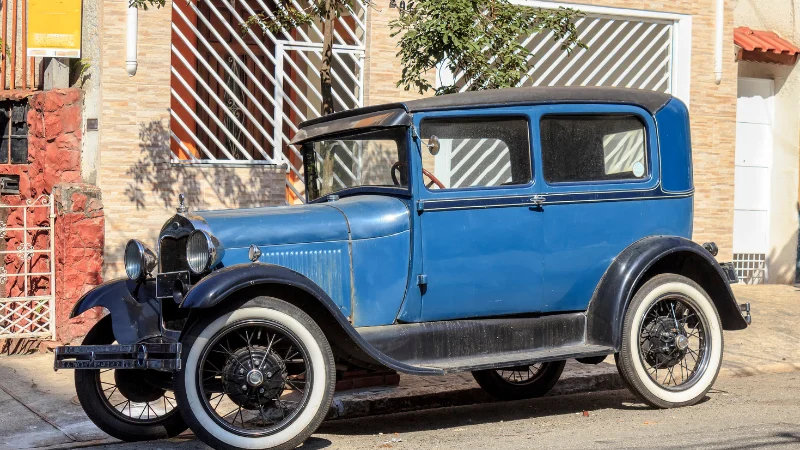
While the development of the motor car has been well documented, the evolution of car wheels is less well known. From the dawn of the automotive industry through to the latest diamond-cut technology, buckle up for a journey of discovery…
The importance of the wheel cannot be overstated. One of the most important inventions in human history, it has transformed how people travel, trade and build societies.
When early examples were simple and purely functional in design, over time car wheels have evolved into highly engineered components that influence performance, safety and automotive design.
In fact, the story of car wheels reflects the broader progress of technology, moving from basic tools to the precision engineering of the 21st century.
The early days of motoring
When the first motor cars appeared in the late 19th century, such as the Benz Patent Motor Car, they were little more than engine-powered carriages. Early vehicles were fitted with wooden wheels, typically made with wooden spokes and rims strengthened by steel bands. These wheels followed the same basic design dating back to ancient chariots and wagons.
Wooden wheels were without suspension or rubber tyres, so struggled to cope with increasing vehicle weight, rough roads and the higher speeds brought about by advancing engine technology. As cars became more powerful and more common, manufacturers needed a stronger and more reliable solution.
The shift to steel car wheels
Steel and wire car wheels began replacing wooden ones in the early 20th century as car technology developed. These wheels were far stronger and better suited to the demands of faster, heavier motor vehicles.
Not surprisingly, they quickly became the standard across the car industry. They were simple in design, usually painted black or silver and were later covered with chrome hubcaps to improve their appearance. Even today, many affordable modern cars are produced with steel wheels, many covered with plastic hubcaps.
The rise of alloy wheels
The major turning point came in the 1960s with the introduction of alloy wheels. Made from a blend of metals, most commonly aluminium and magnesium, these wheels were significantly lighter than steel and were popular in motorsport. Cars fitted with alloy wheels handled better, accelerated more efficiently and used less fuel.
As manufacturing techniques improved, alloy wheels became more affordable and started appearing on everyday road cars. Their ability to be shaped into stylish designs also made them attractive to drivers who wanted their vehicles to stand out visually.
By the end of the 20th century, alloy wheels had become a common feature across many vehicle types, from family hatchbacks to high-performance supercars.

The development of diamond-cut wheel technology
In recent years, alloy wheel design has moved even further forward with the development of diamond-cut alloy wheels. These represent one of the most advanced finishes available today, combining precision engineering with a distinctive premium appearance.
The diamond-cut process involves machining the face of the wheel using a CNC lathe fitted with a diamond-tipped cutting tool. This removes an ultra-thin layer of metal to create a bright, reflective surface. The result is a striking two-tone look that contrasts polished metal with painted sections of the wheel.
Initially, diamond-cut wheels were seen mainly on luxury vehicles and high-end sports cars. As production methods became more efficient, they gradually spread to a much wider range of vehicles. Today, they can be found on everything from premium brands to more affordable everyday models.
To learn more, read our article ‘What is a diamond-cut alloy wheel?’.
The future of car wheels
As automotive technology continues to evolve, so too will wheel design. Manufacturers are already exploring new materials, lighter construction methods and innovative finishes that can enhance both performance and sustainability.
From simple wooden rims to the sophisticated diamond-cut alloys seen today, the journey of car wheels shows just how far automotive engineering has come. What began as a purely practical component has become a key part of a vehicle’s identity, influencing everything from driving dynamics to visual style.
