You’ll find them on everything from family hatchbacks to supercars as they display a sharp, high-end appearance, but what is a diamond cut alloy wheel?
While they are in demand for their visual appeal, many motorists are unsure what “diamond cut” actually means, and whether damaged wheels can be repaired. In this article, we’ll explain how diamond cut alloy wheels are manufactured, and how mobile specialists can provide quick and professional repairs.
How do powder-coated and diamond-cut alloy wheels differ?
The powder coating process involves spraying alloys with electrostatically charged dry powder so that paint particles stick evenly to the wheel surface. The powder mix usually consists of colour pigments, flow modifiers, curing additives and levelling agents. The precise blend can be altered to produce a virtually limitless range of finishes.
The curing stage involves heating the powder-coated wheels in a kiln oven so the powder melts and sticks to the metal. Curing can only be done at a specialist workshop. Once cooled, technicians apply a clear coating to the wheel.
So what is a diamond cut alloy wheel? They have a distinctive two-tone finish, with dark painted areas contrasting with bright, metallic cut surfaces usually around the spokes or inner barrel. The precision machining gives diamond-cut wheels their crisp and premium look.
How are diamond-cut alloy wheels manufactured?
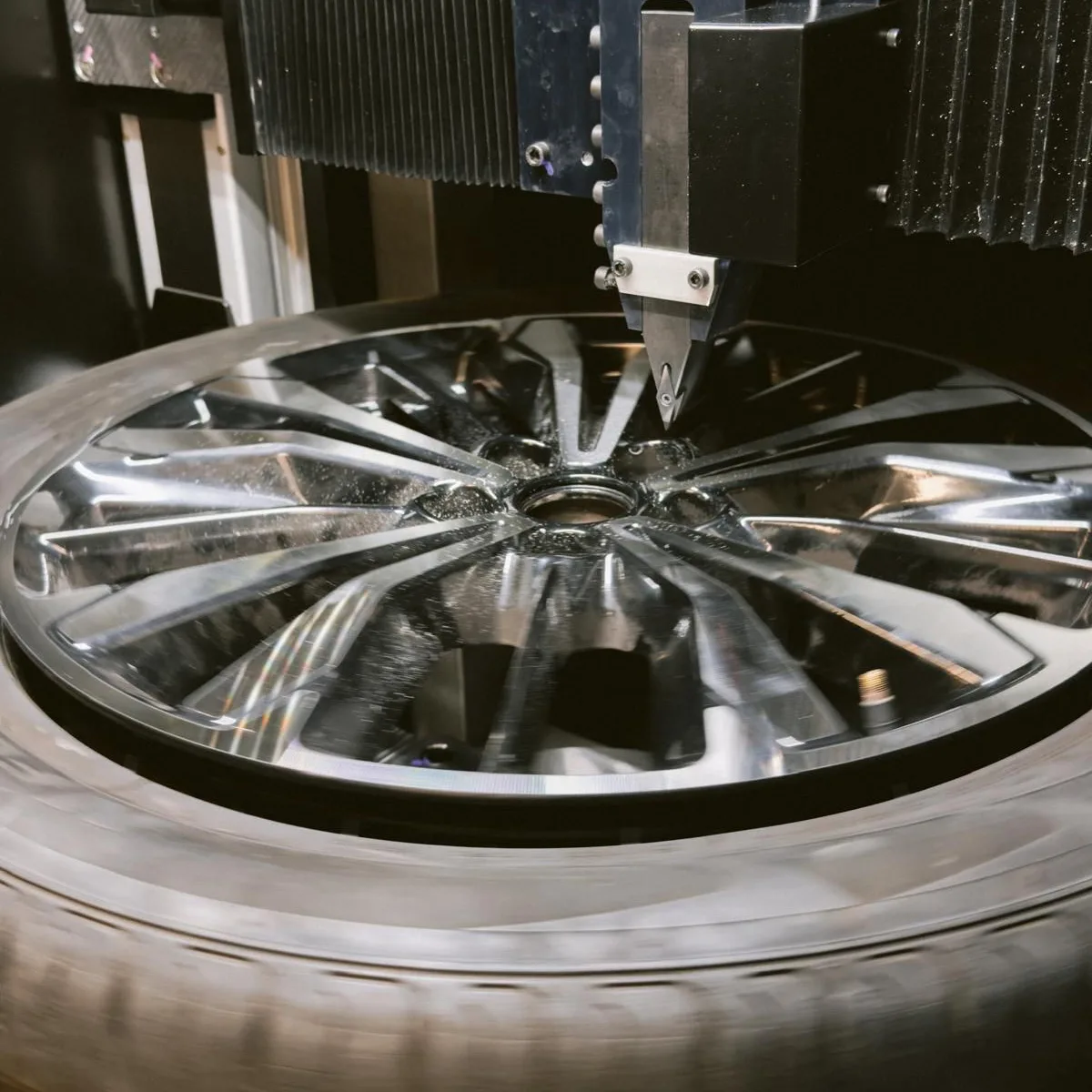
To fully answer the question ‘what is a diamond-cut alloy wheel?’, you need to understand the production process. It begins in much the same way as a standard alloy wheels, as they are cast and then shaped into their final design. Next, the wheel is painted, typically in a dark colour such as black or anthracite. The wheel is then mounted onto a specialist machine known as a CNC/DCR lathe for the diamond cutting. A fine cutting tool is passed across the wheel, removing a thin layer of metal to expose the alloy beneath the paint, creating the distinctive smooth, reflective surface.
Once the cutting process is complete, the wheel is coated with a clear lacquer to seal and protect the exposed metal. Popular wheel manufacturers include OZ Racing and BBS.
Why are diamond-cut wheels prone to damage?
While diamond-cut wheels look impressive, they are vulnerable to bumps and scrapes. The lacquer protecting the exposed metal can be easily breached by kerbing, stone chips or corrosion. Once moisture gets under the lacquer, the wheel can begin to oxidise, leading to cloudy patches or peeling around the edges.
Even light kerb damage is noticeable on a diamond-cut finish, which is why many drivers worry that damage means a full replacement or an expensive refurbishment.
Can diamond-cut alloy wheels be repaired?
The good news is that diamond-cut alloy wheels can now be repaired without visiting a workshop. Advances in technology and repair techniques mean mobile specialists such as 4 Fresh Wheels can restore lightly to moderately damaged wheels on-site. This includes repairing damage, refinishing the wheel and reapplying protective coatings.
Using a mobile technician and state-of-the-art technology means there’s no need to remove the vehicle from your dealership forecourt. This makes mobile repair an extremely convenient option for busy used car traders.
Conclusion: what is a diamond-cut alloy wheel?
Diamond-cut alloy wheels are designed to stand out, and damage can quickly spoil a vehicle’s appearance. Understanding how wheels are made helps to explain why they need specialist care, but also why repairs are now more accessible than ever.
Skilled mobile specialists from 4 Fresh Wheels are a modern solution for a modern wheel, and are able to carry out high-quality repairs on-site. Arranging repairs is no longer a headache for dealerships, so if you’re looking for a reliable, professional alloy wheel specialist in Hertfordshire, Bedfordshire, Cambridgeshire and Buckinghamshire, get in touch today.
